


In recent years, pickleball and padel, two emerging sports, have attracted increasing attention from sports enthusiasts. So, what are the differences between these two sports?
Differences in Courts and Rules
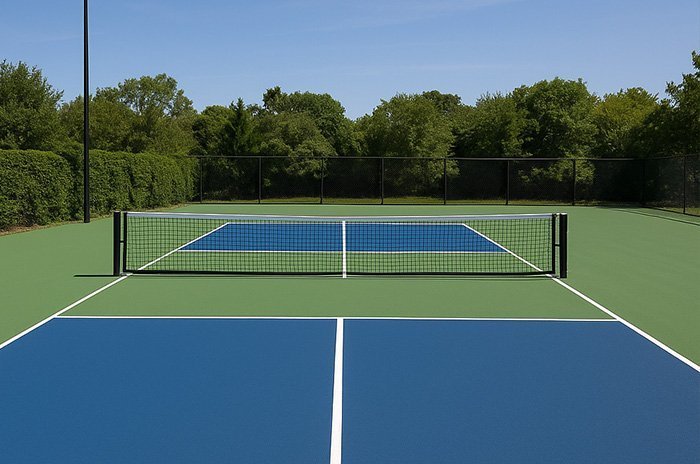
Pickleball
- Court: An open rectangular court measuring 13.41m (length) × 6.10m (width) — about one-fourth the size of a tennis court.
- Key Rules:
- There is a Non-Volley Zone on both sides of the net, extending 1.06m from it, commonly known as the “kitchen.” Players are not allowed to volley (hit the ball in the air) in this area. This rule limits powerful attacks and increases the game’s tactical competitiveness.
- Pickleball can be played in singles or doubles, with a relatively relaxed tempo that makes it suitable for players of all ages.
Padel
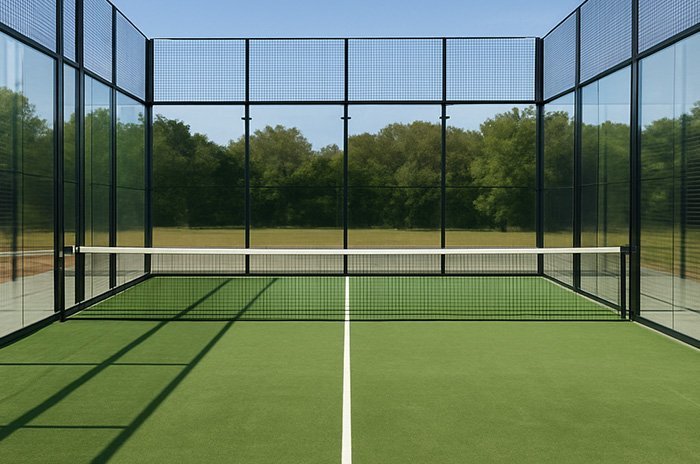
- Court: A fully enclosed rectangular court measuring 20m (length) × 10m (width) — about one-third the size of a tennis court.
- Key Rules:
- The court is surrounded by tempered glass walls and metallic fences. The ball can bounce off the walls to keep the rally going, increasing both the length of rallies and the fun of the game.
- Only doubles matches are allowed. Players must cooperate closely and design tactics using the walls, resulting in faster-paced and more intense competition.
Materials and Equipment
Pickleball
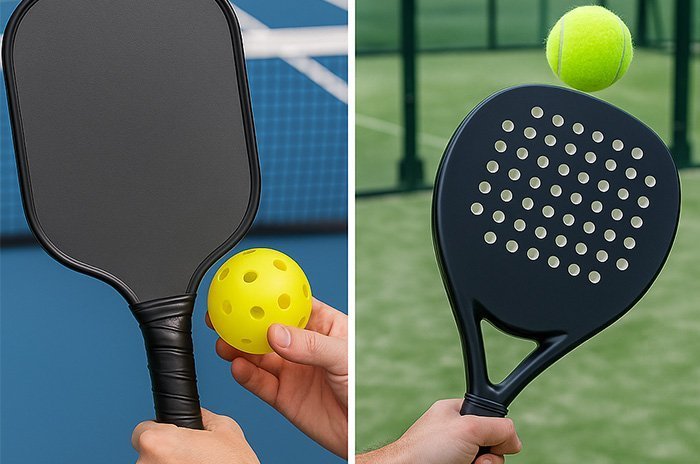
- Ball: Made of hard plastic with a hollow structure. It has 26 holes (for indoor) or 40 holes (for outdoor), each about 1cm in diameter, evenly distributed over the surface. This design reduces wind resistance, stabilizes flight, and lowers the ball’s weight (about 22–26 grams).
- Racket:
- Length: No more than 43.18cm (17 inches). The combined length and width cannot exceed 60.96cm (24 inches).
- Shape: Solid-faced paddle, similar to an enlarged table tennis racket. Common sizes include 398mm × 194mm or 393mm × 206mm.
- Racket and Ball Coordination: The light paddle and low-bounce ball reduce physical strain, emphasizing strategy and shot placement, making the game accessible to all age groups.
Padel
- Ball: A rubber ball similar to a tennis ball but slightly smaller (diameter 6.35–6.67cm) and with lower internal pressure. The surface is covered with felt or soft material to increase friction.
- Racket:
- Length: The total length (including handle) must not exceed 45.5cm.
- Width: No more than 26cm; thickness no more than 38mm.
- Shape: The hitting surface is perforated with small circular holes (9–13mm diameter). A wrist strap attached to the handle prevents the racket from slipping.
- Racket and Ball Coordination: The heavier racket and higher-bounce ball increase the game’s power and competitiveness, offering a more intense experience similar to a simplified version of tennis.
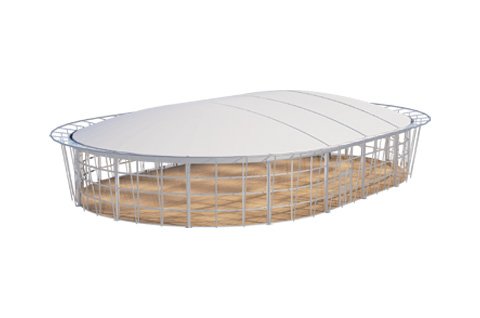
To meet the growing demand for pickleball and padel facilities, modular aluminum-alloy tents provide an ideal all-weather sports space that offers protection from the sun, rain, wind, and snow.
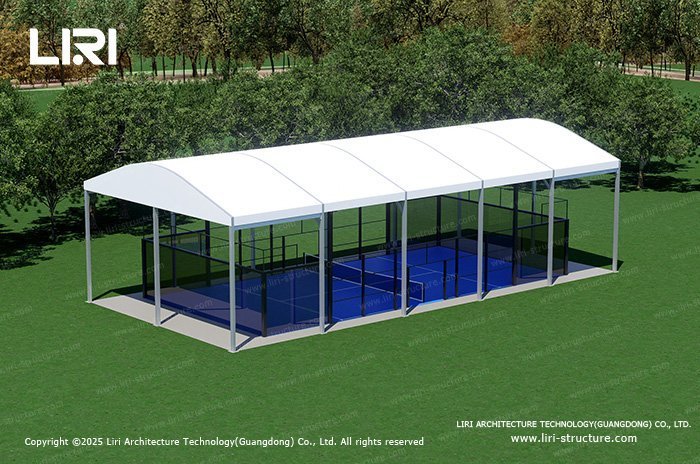
These modular tents feature:
- Quick installation—can be assembled within a few days.
- Flexible use—suitable for both temporary and permanent applications.
- High customization—dimensions, shape, and functional zones can be tailored according to site requirements.
- Expandable design—allowing for extensions and layout adjustments as needed.



 Liri Structure is the best marquee tent manufacturer, supplier, exporter in China. Our party tents, wedding tents and event tent structures have been exported to over 130 countries.

