


The choice of exhibition tent size directly impacts the event’s experience, safety, and overall effectiveness. The number of attendees is the core factor determining tent size. A suitable size must not only match the number of attendees but also consider the event type, per capita usable area, and functional layout to create an efficient and comfortable exhibition space. Below, we systematically explain how to select the appropriate exhibition tent size based on the number of attendees, covering three aspects: tent span selection, per capita usable area calculation, and functional zoning planning.
Determine the tent span based on the number of exhibitors
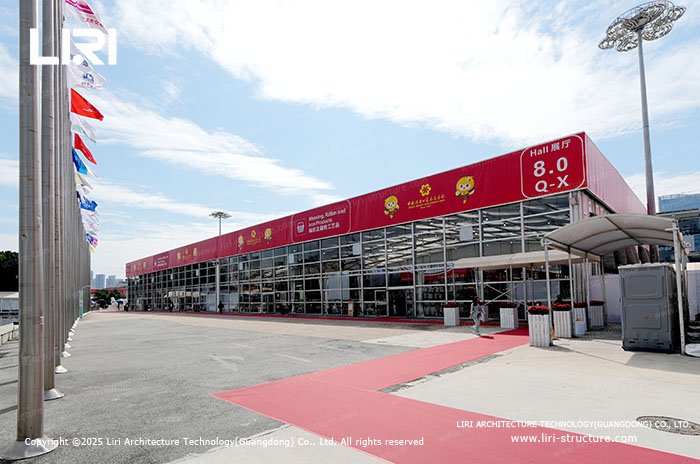
Tent span is a key parameter determining space capacity. Based on the size of the attendees, exhibitions can be categorized into small, medium, and large events, each with different tent span requirements:
- Small-scale exhibitions (under 50 people): Suitable for events with a small number of attendees and rapid movement, such as brand pop-ups, small product launches, or industry exchange meetings. A 5-10 meter span tent is recommended; the length can be customized to meet specific needs, such as 10-15 meters.
- Medium-sized exhibitions (50-200 people): Suitable for commercial exhibitions or themed forums with a certain scale of display. A 10-15 meter span is recommended, with a length controlled at 20-30 meters. Common specifications include 10m x 20m or 12m x 25m, which can meet basic display and traffic flow layout requirements.
- Large-scale exhibitions (over 200 people): Suitable for large trade shows, international exhibitions, and comprehensive display events. A span of 15 meters or more and a length of 30 meters or more are recommended, such as 20m x 30m or 25m x 40m. If a single tent is insufficient, a 50-meter span tent or multiple tents connected in parallel can be used to flexibly expand the overall scale.
Calculating the average usable area per person based on activity type
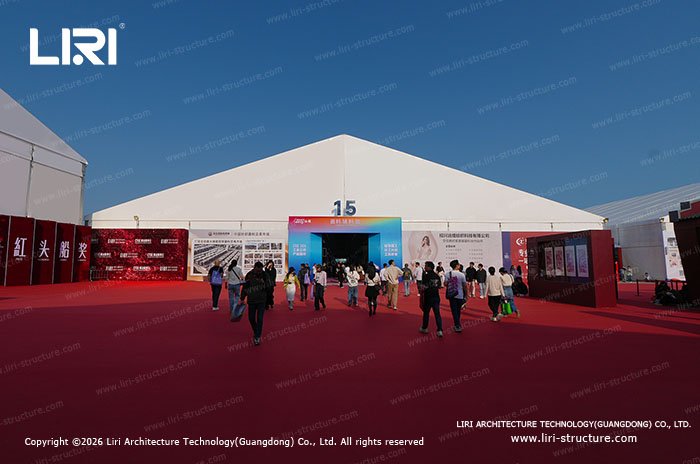
After determining the span, it is also necessary to calculate the per capita usable area based on the type of activity to ensure the exhibition experience and the comfort of passage:
- Regular Exhibitions: Primarily booth-based, approximately 1.5–2 square meters per person, including aisle and booth spacing, sufficient for normal visitor flow.
- Interactive or Conference-Style Events: Requires tables, chairs, and communication space, approximately 2–3 square meters per person.
- Standing or High-Mobility Events: Such as cocktail parties, roadshows, etc., where fixed seating is not required, 1–1.5 square meters per person is sufficient.
Reference calculation formula
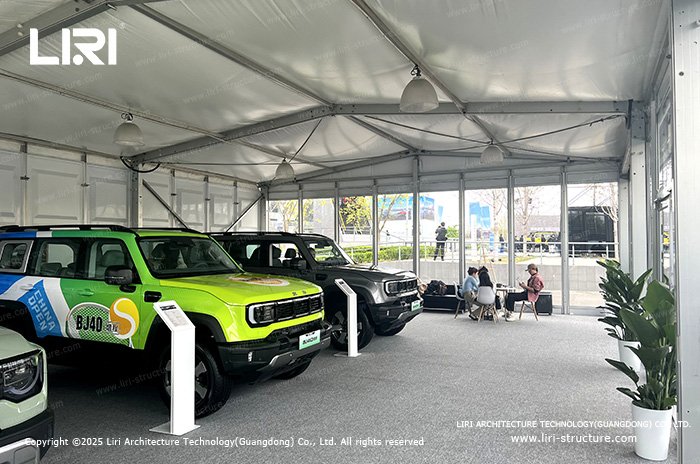
Estimated tent area = Number of exhibitors × Area per person + Area of functional zones
For example, for a medium-sized business meeting with 200 people, each person would need 2.5 square meters. In addition, the total area for the stage, rest area, and other functional areas would usually need to be reserved to 600-700 square meters. The corresponding tent size could be 15 m× 40 m or 20 m× 30 m.
Utilizing functional zoning for rational space planning
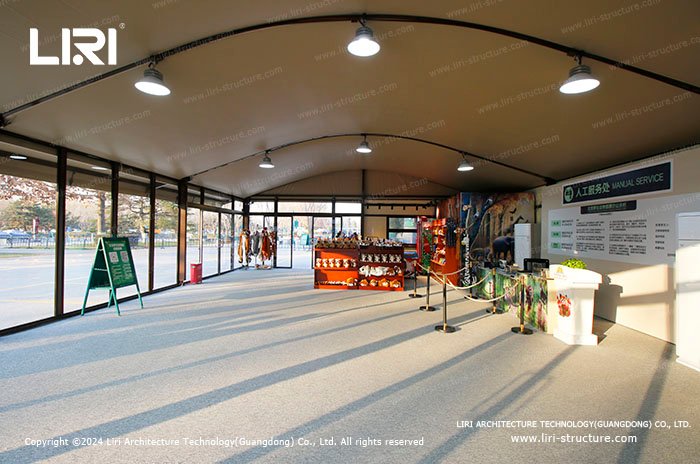
In addition to the basic area corresponding to the number of exhibitors, separate spaces should also be reserved for functional areas to avoid overcrowding or chaotic flow at the event venue:
- Stage area: Approximately 10%–20% of the total area, depending on the performance or presentation needs;
- Rest area: Reserved at 0.5–1㎡ per person to provide a short rest space;
- Catering area: Rationally planned according to the number of diners and service method (buffet/table service), typically requiring an additional 20%–30% of the area;
- Passageways and safety exits: Must comply with fire evacuation regulations, with sufficient passageway width and multiple safety exits to ensure the safe and orderly conduct of the event.
At the same time, large tents should also consider ventilation, air conditioning, lighting, and power configuration to further enhance the overall user experience.
Choosing the right size for an exhibition tent should be based on the number of attendees, combined with the type of event, to determine the tent span and the area used per person. Then, functional zoning and safety planning should be coordinated to create an efficient, comfortable, and safe exhibition space. Whether it’s a small exchange meeting of 50 people or an international exhibition with thousands, scientific size calculations can maximize the value of the tent space and lay a solid foundation for the event’s success.


 Liri Structure is the best marquee tent manufacturer, supplier, exporter in China. Our party tents, wedding tents and event tent structures have been exported to over 130 countries.

