
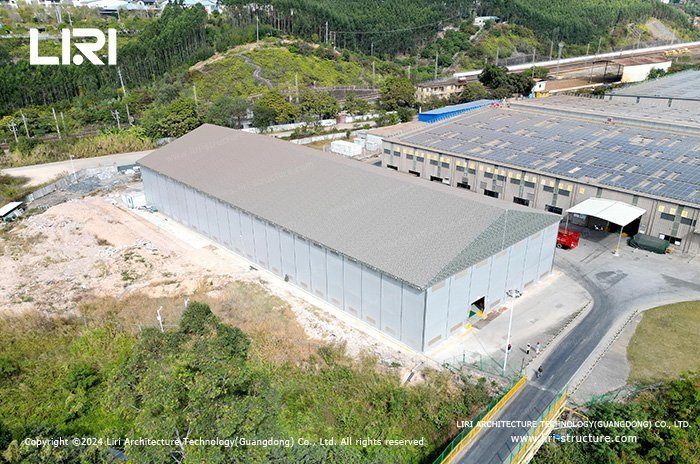
Large warehouse tents are a quick and flexible temporary or semi-permanent warehousing solution widely used in industrial manufacturing, logistics warehousing, and other fields. The overall construction speed depends primarily on three key aspects: planning and design, production cycle, and on-site setup.
Planning and Design
Large warehouse tents have mature structures, a high degree of modularity, and are designed with very high efficiency.
For routine projects, the design cycle is usually 1–7 days.
For projects with high customization requirements (such as reserving passageways for large equipment, special spans, or functional zoning): the design time may be extended appropriately.
Production Cycle
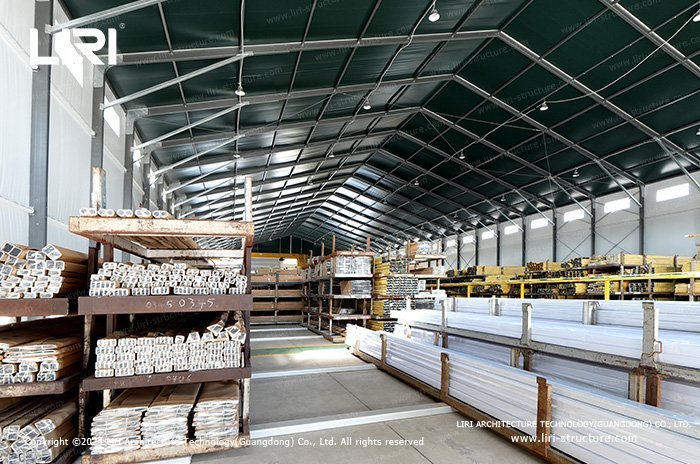
The warehouse tents are produced using a prefabricated and standardized production method, with most components being processed in the factory.
Under normal circumstances, it takes about 15–30 days from production to being ready for shipment.
Mass production capacity and configuration complexity will have a certain impact on the cycle time.
Setup Time
The large warehouse tent adopts a modular assembly structure, which makes the components lightweight, the installation efficiency high, and the on-site construction cycle short.
- For areas under 500 square meters, the setup can usually be completed within one day.
- For areas over 1000㎡, the overall setup can generally be completed in 3–5 days.
- If special structures or additional systems are involved, the construction time may be extended accordingly.
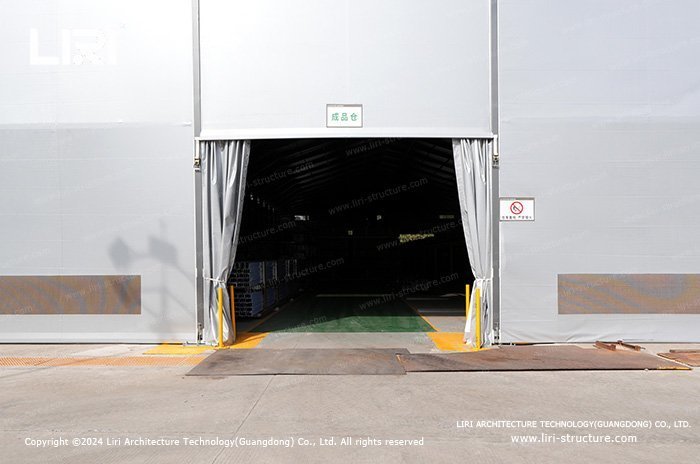
It’s important to note that on-site setup efficiency is also affected by factors such as site flatness, ground type, and weather conditions. Preparing the site in advance and choosing an appropriate construction time can help shorten the overall construction cycle. Warehouse tents, from design to deployment, offer a short cycle and rapid response, making them an efficient solution for addressing the rapidly growing demand for storage space.


 Liri Structure is the best marquee tent manufacturer, supplier, exporter in China. Our party tents, wedding tents and event tent structures have been exported to over 130 countries.

