


While indoor tennis courts provide an all-weather environment for sports activities, issues such as insufficient natural lighting, poor air circulation, and excessive heat and stuffiness also need to be addressed, for indoor tennis courts built with modular tent structures, lighting and ventilation can be optimized through the selection of fabric materials, structural design, and supporting systems. This helps improve natural daylighting and ventilation while maintaining the necessary protection and performance of the venue and enhancing the overall sports experience.
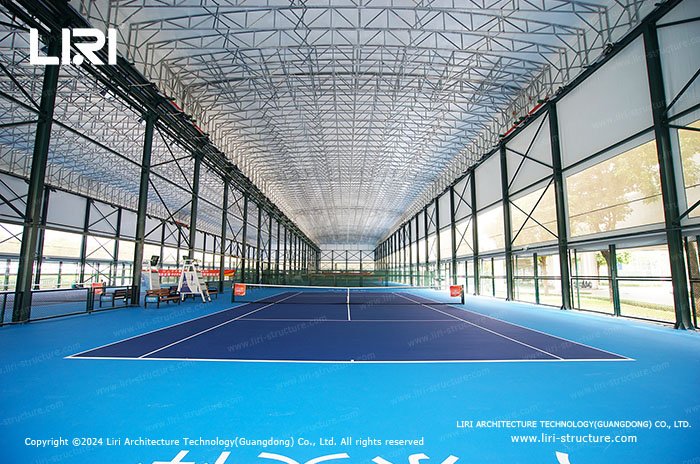
Optimize Natural Lighting with PVC Fabric
Depending on the requirements of the tennis court and local climatic conditions, translucent or transparent PVC fabric can be selected to allow natural light to enter the venue and reduce the reliance on artificial lighting during the daytime.
In areas that are more susceptible to high temperatures, thermal insulation materials can also be incorporated into the design. This helps reduce solar heat gain and the transfer of outdoor heat while maintaining natural lighting and reducing heat accumulation inside the venue.
Natural lighting mainly meets the needs of daytime use. During cloudy weather, at night, or when higher illuminance levels are required, a professional tennis court lighting system is still necessary to provide stable and uniform illumination across the playing area.
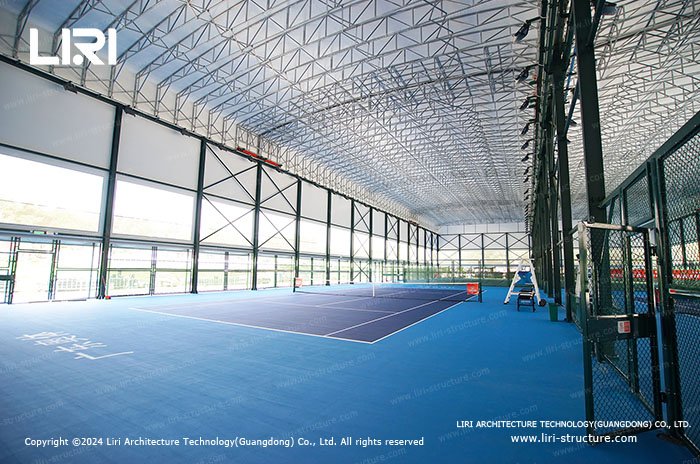
Improve Ventilation Through Structural Design
Proper structural design can effectively improve natural ventilation in an indoor tennis court. Ventilation windows can be installed at both ends of the tent to promote air circulation through natural convection and facilitate the exchange of indoor and outdoor air, helping to remove accumulated hot air from the venue.
Fixed windows can also be incorporated into the roof or sidewalls to increase natural daylighting while improving the indoor environment.
For projects requiring greater flexibility in ventilation, an electric retractable roof structure can also be used. Depending on weather conditions, a section of the roof can be opened to introduce natural light and outdoor air and accelerate heat dissipation. In the event of rain or other adverse weather conditions, the roof can be closed promptly to provide reliable protection for the tennis court.
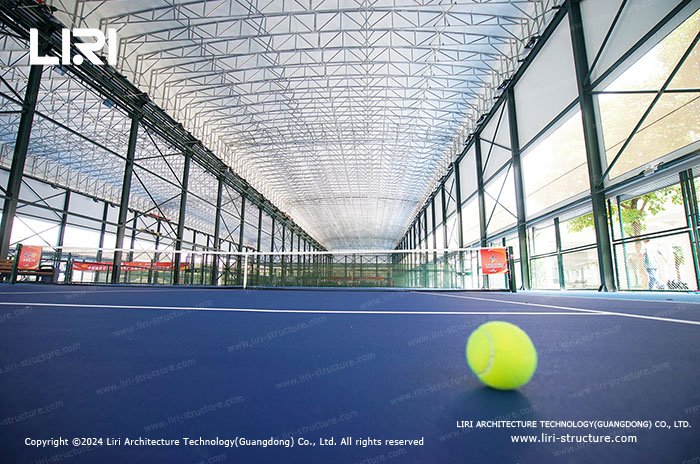
Add HVAC and Fresh Air Systems When Needed
For fully enclosed indoor tennis courts, relying solely on natural ventilation may not be sufficient to meet year-round operational needs, particularly in hot and humid climates or environments with high occupancy and frequent use.
In such cases, air-conditioning and fresh air systems can be installed. The air-conditioning system regulates the indoor temperature, while the fresh air system continuously introduces fresh outdoor air and promotes air circulation, further alleviating heat, stuffiness, and insufficient ventilation.
By appropriately combining natural daylighting, structural ventilation, and environmental control systems, indoor tennis courts can provide a more stable and comfortable indoor environment in terms of lighting and air circulation, creating a comfortable, all-weather sports space for daily training, competitions, and commercial operations.


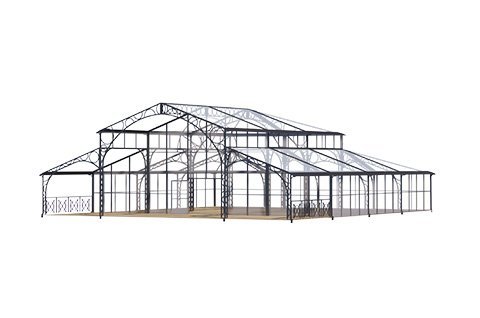


 Liri Structure is the best marquee tent manufacturer, supplier, exporter in China. Our party tents, wedding tents and event tent structures have been exported to over 130 countries.

