


Many users who intend to purchase temporary industrial buildings have doubts about the lighting performance of the building, especially when choosing a temporary building with natural lighting. They want to know how its lighting effect compares to traditional buildings. The lighting performance of temporary industrial buildings is affected by many factors. Still, by taking appropriate measures, good natural lighting effects can be ensured, improving the comfort and energy saving of the working environment.
Choosing the right material
In temporary industrial buildings, choosing the right materials is crucial. In order to maximize the introduction of natural light, transparent or translucent PVC covers are often used in architectural design. Transparent covers can effectively introduce sunlight and keep the interior bright, while reducing dependence on artificial lighting and reducing energy consumption.
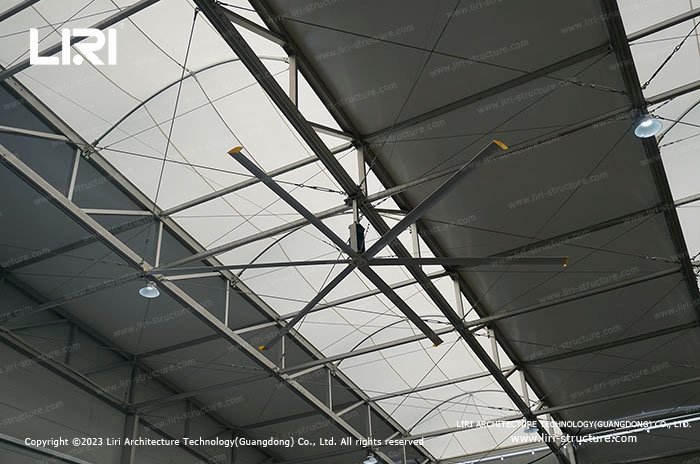
Influence of natural factors
The intensity of natural light is affected by the angle of incidence of sunlight and the orientation of the building, which is directly related to the effect of natural lighting. By properly designing the structure and orientation of the building, it is possible to ensure longer exposure to natural light and improve indoor lighting conditions. For example, when selecting a location for a temporary industrial building, the best design solution can be determined by measuring the total outdoor illumination value. In addition, changes in climate and weather conditions will also affect the lighting effect, but by using appropriate materials, the negative impact of these external factors can be reduced.
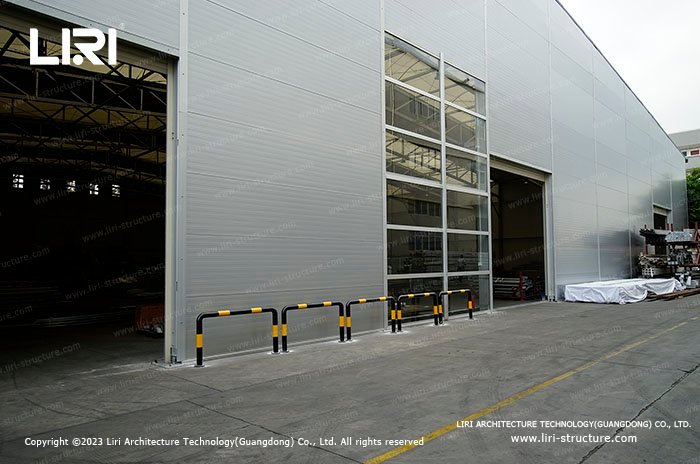
Influence of the surrounding environment
The surrounding environment of temporary industrial buildings also affects the natural lighting effect. If there are tall or dense buildings around, they may block the sunlight and cause insufficient lighting. The height and density of surrounding green plants may also reduce the exposure to sunlight. In order to improve the lighting effect, choosing an open site and considering the influence of the surrounding environment will help ensure that the building can make the most of natural light.
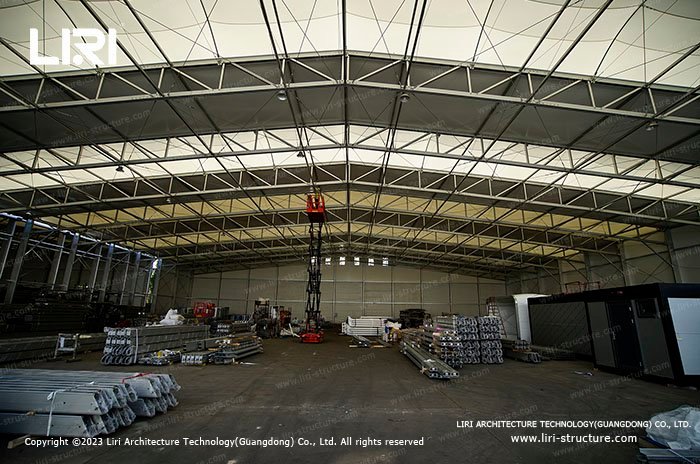
Optimize facility configuration
In order to better control the amount of natural light, installing smart shading facilities is a good choice. You can use automatic sunshades, adjustable blinds, or awnings to help adjust the light intensity indoors. Through these facilities, temporary industrial buildings can not only adjust the light in different seasons and weather but also effectively reduce energy consumption, improving the comfort and sustainability of the building.
By optimizing these factors, temporary industrial buildings are able to utilize natural light, provide a bright, energy-efficient working environment, and meet the needs of different industries for industrial space.


 Liri Structure is the best marquee tent manufacturer, supplier, exporter in China. Our party tents, wedding tents and event tent structures have been exported to over 130 countries.

