
With the rapid development of the modern warehousing and logistics industry, there is a growing demand for flexible and efficient storage space among enterprises. Warehouse and logistics tents, with their advantages such as quick installation, structural stability, and high customizability, are increasingly becoming a vital choice for businesses. Selecting appropriate warehouse and logistics tents can not only enhance operational efficiency but also effectively ensure cargo safety and optimize the overall cost structure. The following are several key factors to focus on when choosing warehouse and logistics tents.
Shape and Dimensions
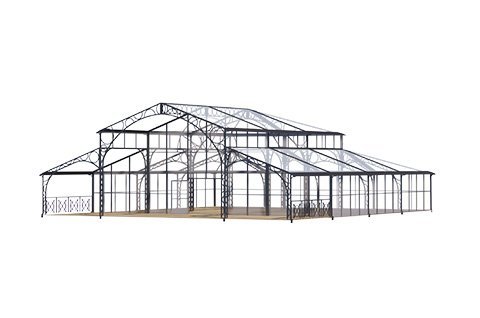
Warehouse and logistics tents come in a variety of structural forms, including designs such as A shape roofs, arcum roofs, and curve roofs. These designs can accommodate the operational requirements of different work scenarios, such as truck entry and exit, crane operations, and forklift access.
The span, height, and overall area of the tent can be fully customized based on the actual scale of the storage operation. This ensures a rational spatial layout, enhancing both storage capacity and operational efficiency.

Material and Safety
High-quality warehouse and logistics tents typically feature frames made of high-strength aluminum alloy, offering a stable structure, corrosion resistance, and a long service life, with the ability to withstand significant wind loads and external impacts.
The canopy fabric is generally made of double-sided knife-coated PVC-coated fiber material, which provides excellent properties such as wind resistance, waterproofing, flame retardancy, and UV protection. This ensures a safe and stable storage environment for goods, meeting the requirements of various warehousing and logistics applications.

Site Selection and Construction
In terms of site selection, factors such as ground levelness, surrounding environment, climatic conditions, and available space should be comprehensively considered.
Warehouse and logistics tents adopt a prefabricated structural design, offering advantages such as rapid assembly, flexible disassembly, and reusability. Coupled with professional scaffolding systems, they can be efficiently installed even under challenging terrain or temporary site conditions, enabling businesses to quickly put them into operation.
Flexibility and Scalability
Compared to traditional warehouse buildings, tent structures offer greater flexibility. Enterprises can adjust the dimensions, layout, or functionality of the tents as needed to accommodate business growth, enabling rapid expansion or relocation of storage space while reducing long-term operational costs.

Cost and Return on Investment
Warehouse and logistics tents provide significant advantages in terms of construction timelines, project costs, and long-term maintenance. Their cost-effectiveness allows businesses to secure efficient and secure storage space with lower investment, thereby improving the overall return on investment.


 Liri Structure is the best marquee tent manufacturer, supplier, exporter in China. Our party tents, wedding tents and event tent structures have been exported to over 130 countries.

