


As warehousing demand continues to grow, more and more companies are turning to Warehouse Tent as an alternative storage space solution. So, what are the differences between a Warehouse Tent and a Traditional Warehouse Building? Below is a detailed comparison and analysis of their construction methods, affordability, practicality, and performance.

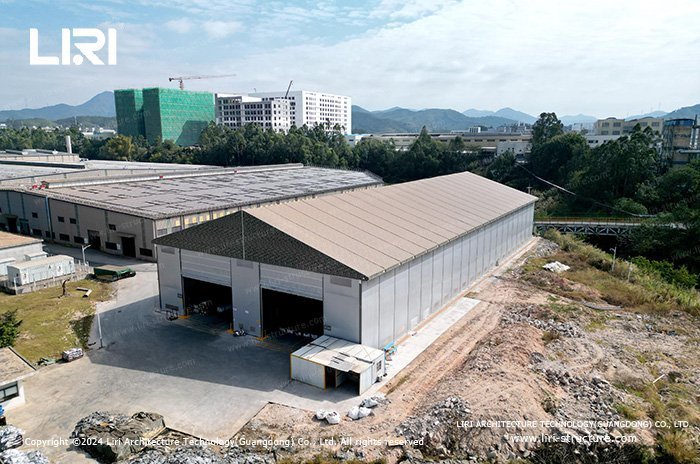
1. Construction method: Warehouse Tent is more flexible and convenient.
Warehouse Tent utilizes a modular design and prefabricated structure, enabling rapid construction in a short time. Compared to traditional warehouse building that requires complex foundation construction and lengthy approval processes, the construction process of Warehouse Tent is more flexible and efficient. And it can be put into use within a few days to a few weeks. In addition, it is almost not restricted by terrain, and its size and layout can be adjusted according to the actual needs of the enterprise. It is very suitable for temporary or emergency storage scenarios.
2. Cost: Warehouse Tent is more economical
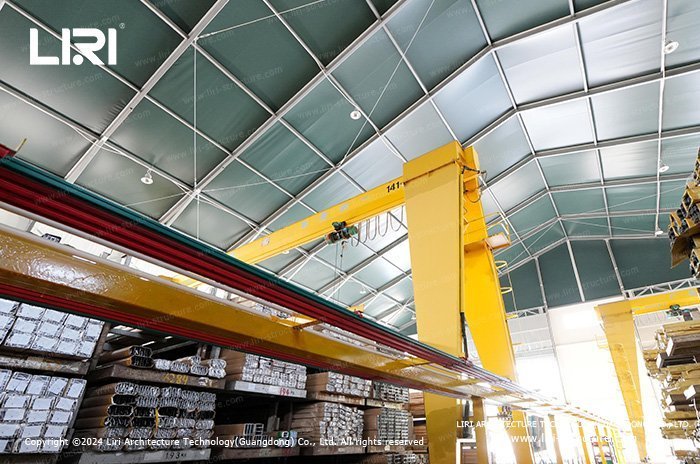
Traditional Warehouse Building typically utilizes reinforced concrete structures, which are time-consuming and costly to construct. Warehouse Tent, on the other hand, utilizes high-strength aluminum alloy as the main frame, combined with PVC film, significantly reducing construction and labor costs. Its lightweight structure not only saves material but also reduces transportation and installation costs, enabling enterprises to recover their investment costs in a shorter period of time and achieve higher economic benefits.
3. Practicality and Reusability
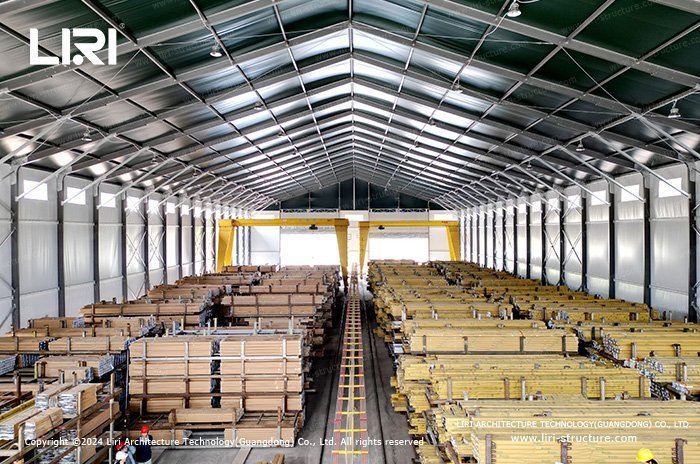
Once built, a Traditional Warehouse Building is difficult to dismantle or relocate, limiting its flexibility. However, Warehouse Tent can be quickly disassembled and reassembled as needed, significantly improving space utilization efficiency. For seasonal warehousing, temporary inventory expansion, or project construction sites, Warehouse Tent can be adjusted or relocated at any time based on business changes
4. Performance: Safety and durability
Many people assume that a lightweight structure is inherently unstable, but this isn’t the case. Modern Warehouse Tent utilizes aircraft-grade aluminum alloy construction and double-sided PVC-coated fabric, offering excellent windproof, rainproof, UV-resistant, and flame-retardant properties. Its structure can withstand winds of up to level 8-10, and can remain safe and stable even in adverse weather conditions, providing reliable protection for the company’s cargo storage.
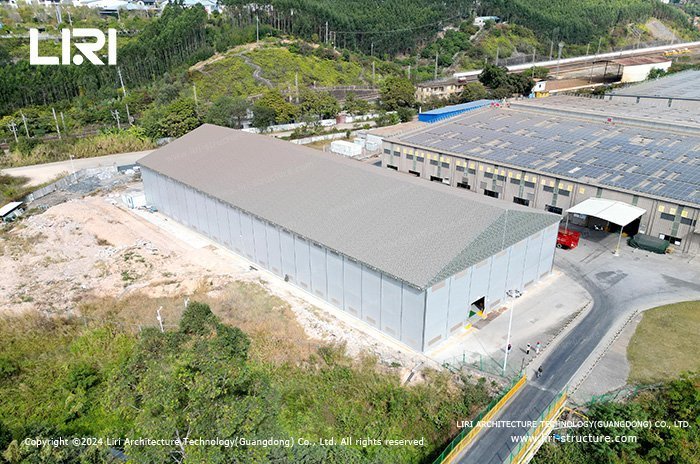
Overall, Warehouse Tent, with its flexible construction methods, low construction costs, robust mobility, and superior security, is becoming an ideal alternative to Traditional Warehouse buildings. For modern businesses striving for efficient, cost-effective, and sustainable development, Warehouse Tent is undoubtedly a more competitive warehousing solution.


 Liri Structure is the best marquee tent manufacturer, supplier, exporter in China. Our party tents, wedding tents and event tent structures have been exported to over 130 countries.

