


Under high-temperature summer conditions, indoor badminton courts with inadequate thermal insulation and ventilation design are prone to heat accumulation and poor air circulation. These issues not only affect sports comfort but also increase the operating load of the venue’s air conditioning and ventilation equipment.
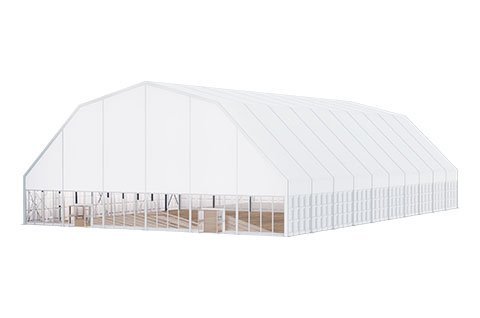
For indoor badminton courts with prefabricated aluminum alloy structures, comprehensive optimization can be achieved through measures such as roof insulation, natural ventilation, mechanical exhaust, and air conditioning systems. This approach lowers indoor temperatures while providing a more stable and comfortable playing environment for badminton.
Reduce Solar Heat Gain
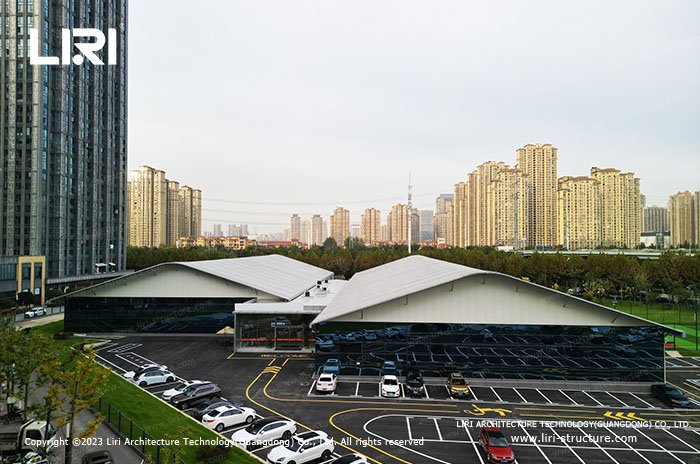
Reducing the ingress of solar radiation heat is a key measure in controlling the temperature of indoor badminton courts during summer.
The venue roof can be covered with PVC-coated fabric that offers UV protection, shading, and weather resistance, thereby reducing the impact of direct sunlight and solar radiation on indoor temperatures. For badminton courts located in hot climate zones or intended for long-term operation, a double-layer roof or an additional thermal insulation layer can be installed based on actual needs to further reduce heat conduction through the roof.
A well-designed roof insulation system helps slow down the rate of indoor temperature rise, while also reducing the cooling load on the subsequent air conditioning system, improving overall cooling efficiency.
Improve Natural Ventilation
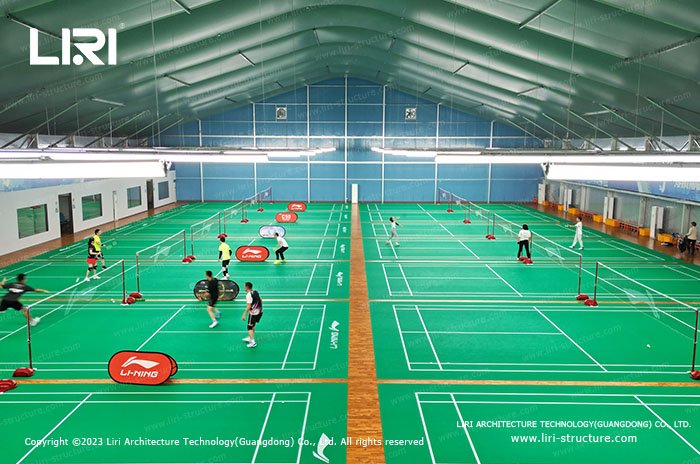
Reasonable spatial layout helps enhance the natural ventilation performance of indoor badminton courts.
Based on the building orientation, prevailing local wind directions, and site-specific conditions, the venue can be designed with appropriately positioned entrances, exits, operable side walls, or ventilation openings to facilitate effective air convection between the indoor and outdoor environments, and accelerate the exhaust of hot air.
Adequate circulation and buffer spaces should also be reserved between courts and around the perimeter of the playing area to prevent partitions or equipment from excessively obstructing airflow, thus reducing the concentration and accumulation of hot air within the venue.
Add Mechanical Ventilation
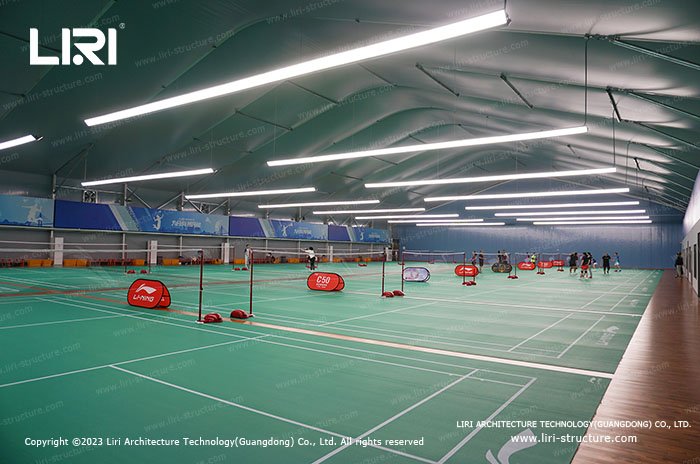
When outdoor temperatures are high, the venue is large in area, or natural ventilation conditions are limited, mechanical ventilation can be employed to further enhance air circulation.
Depending on the scale of the venue and the number of occupants, exhaust fans, fresh air systems, or other ventilation equipment can be installed to promptly discharge indoor hot air and introduce fresh outdoor air, thereby alleviating the stuffy sensation during hot weather.
However, badminton is a sport that is highly sensitive to airflow. The installation positions, air supply directions, and airflow velocities of ventilation equipment must be carefully designed to avoid strong air currents blowing directly onto the courts, which could interfere with the normal flight trajectory of the shuttlecock.
Use Air Conditioning When Needed
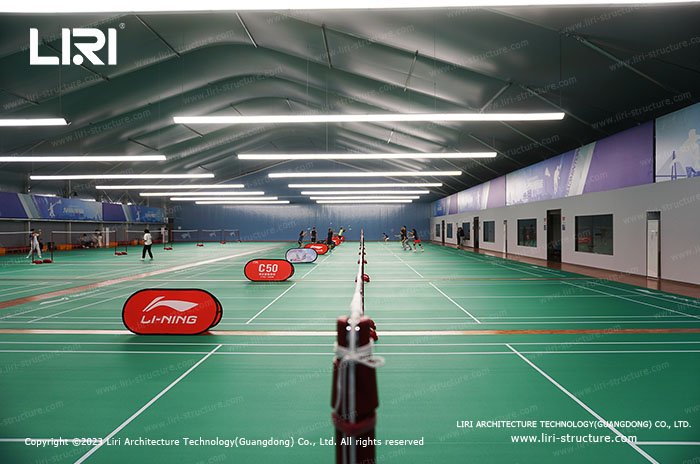
For commercial badminton venues, professional training centers, or indoor badminton courts that require year-round stable operation, relying solely on natural ventilation and mechanical exhaust may still fall short of achieving ideal comfort levels during the peak summer heat.
In such cases, air conditioning systems can be installed based on the venue area, indoor occupancy, local climate, and building insulation performance to actively regulate indoor temperature and humidity.
If roof insulation, wall thermal protection, and ventilation systems are properly designed, they can reduce the continuous ingress of external heat, lower the operating load on the air conditioning system, and help maintain more stable indoor temperatures.
Therefore, addressing the issue of high temperatures in indoor badminton courts during summer is not simply a matter of adding more air conditioning equipment, but rather requires an integrated design approach that combines insulation, ventilation, and air conditioning.
By reducing solar radiation heat gain, optimizing natural airflow, enhancing mechanical exhaust, and deploying cooling equipment according to actual climatic conditions, the summer stuffiness problem in indoor badminton courts can be effectively alleviated, providing a more comfortable sports environment for daily training, commercial operations, and physical activities.


 Liri Structure is the best marquee tent manufacturer, supplier, exporter in China. Our party tents, wedding tents and event tent structures have been exported to over 130 countries.

